Home / Products / Truck Trailer / Hammar Side Loader Trailer

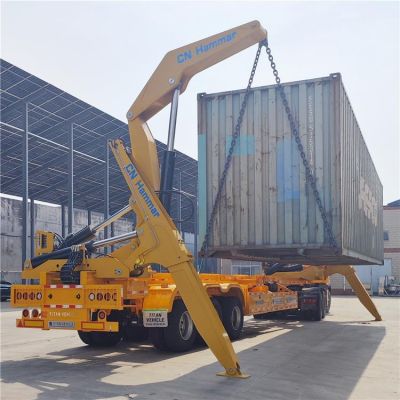
Hammar Side Loader Trailer

Looking 2026 best top 1 hammar side loader trailer price for sale in guyana, Find and buy hammar side loader transport and loading/unlaoding 20/40ft container from popular semi trailer manufacturers and brands
Hammar Extendable Side Lifter Trailer for Sale in Guyana, designed for efficient 20ft and 40ft container handling. Check price, specifications and hydraulic side lifting solutions.
Looking 2026 best hammar 195s side loader trailer for sale in papua new guinea, Find and buy hammar 195 side loader trailer at cost price from popular semi trailer manufacturers and brands
2026 best hammar 110 side lifter trailer for sale in fiji, hammar side lifter at cost price from 2026 top rated side lifter trailer manufacturer and brand.
  • 1/1

Hammar Side Loader Trailer Price for Sale | Hammar 195s/110 Side Lifters | Hammer Container Side Loader

1. Hammar Side Loader Trailers for Sale in Africa

2. Hammar 195S Side Loader Specifications 36–45 Ton Crane Capacity 

3. How Much Does a Hammar Container Side Loader Cost?

4. What is the Maximum Lifting Capacity of a Hammar 195S Side Lifter?

5. How Does a Hammar Container Side Loader Work? 

6. Why Hammar is the 2026 Top 1 Side Loader Trailer Brand for Container Transport


1. Hammar Side Loader Trailers for Sale in Africa

Hammar side loader trailers are a practical solution for African container transport because they combine container lifting, loading and transportation in one trailer, reducing the need for separate container-handling equipment at locations without fixed lifting infrastructure.

The demand for container transportation equipment is growing across many African markets, particularly around ports, inland container depots, logistics parks, mining areas, construction sites and industrial facilities. In these applications, a conventional container chassis can transport a container, but it normally cannot load or unload the container by itself. A separate reach stacker, forklift or crane may therefore be required.

A Hammar side loader trailer changes this operating model by integrating a hydraulic lifting system with a semi-trailer chassis. The trailer can arrive at the loading location, position itself beside the container, deploy its lifting equipment and move the container onto the trailer. 

For buyers searching online for hammar sideloader for sale, the most important consideration is not simply the brand name. The buyer should also evaluate container compatibility, lifting capacity, trailer configuration, hydraulic system, power source, axle capacity, remote control, operating environment and after-sales support.

In Africa, these factors become even more important because operating conditions can vary considerably between countries and regions. A container side loader working around a major port may operate mainly on paved roads, while a unit used by mining, construction or agricultural logistics companies may regularly encounter uneven yards and less-developed access roads.

Hammar Sideloaders for Different African Markets

The application of a hammar side lifter can vary from country to country. In Kenya and Tanzania, for example, container transportation is closely connected with port and inland logistics operations. In West Africa, side loader trailers can be useful for moving containers between ports, industrial areas and inland destinations. In countries with large mining or construction industries, the ability to independently load containers can be particularly valuable.

The trailer transports the container while its integrated lifting system provides loading and unloading capability.

For a logistics company, this can mean fewer dependencies on external lifting equipment. A truck equipped with a Hammar-style side loader can arrive at a customer's location, handle the container and leave without waiting for another machine to become available.

Why African Buyers Consider a Hammar Sidelifter

A conventional container trailer performs one primary job: transporting the container. A hammar sidelifter adds another important function—container handling.

The result is a trailer that can be particularly useful when the pickup or delivery point does not have a fixed crane or reach stacker. This can reduce waiting time and make delivery planning more flexible.

For example, a logistics company may need to deliver a 40ft container directly to a customer's warehouse. If the warehouse does not have lifting equipment, the transport company has to arrange additional machinery or coordinate with a third-party service provider. With a side loader trailer, the transport equipment itself can perform the lifting operation.

This makes the Hammar container side loader concept especially suitable for decentralized logistics networks.

The same advantage can be valuable in construction projects. Containers are frequently used as temporary offices, storage units, workshops and accommodation facilities. Once the container reaches the project location, it may need to be placed precisely on prepared ground. A side lifter provides greater independence during this process.

Mining operations are another important application. Mining sites can be located far away from major cities and may not have easy access to heavy container-handling equipment. A side loader trailer can therefore provide a more self-contained transport solution.

 Hammar Side Loader Trailers for Sale in Africa Hammar Side Loader Trailers for Sale in Africa


2. Hammar 195S Side Loader Specifications 36–45 Ton Crane Capacity 

The Hammar 195S is designed around heavy-duty container handling, with configurations commonly associated with approximately 36–45 ton lifting capacity depending on the specific equipment configuration and lifting conditions. Buyers should confirm the exact rated capacity and lifting radius for the individual unit before purchase.

The Hammar 195S is one of the names buyers may encounter when researching high-capacity container side loaders. For customers looking for a hammar sideloader for sale, understanding the relationship between crane capacity, lifting radius and actual container weight is essential.

A common mistake is to look only at the maximum lifting number. Side loader capacity is not simply a fixed value under every operating condition. The actual lifting capability depends on factors such as the distance between the trailer and the container, lifting position, hydraulic configuration, container type and operating conditions.

For this reason, a statement such as “45 tons” should not automatically be interpreted as “the trailer can lift 45 tons at every position.”

Hammar 195S Capacity and Container Handling

The Hammar 195S is associated with heavy container-handling applications and can be configured for demanding transport requirements. Depending on the configuration, lifting capacities are commonly discussed in the 36–45 ton range.

This capacity range gives the equipment a significant margin for handling standard shipping containers and heavier specialized container loads.

For a 20ft container, the required lifting force may be considerably different from that required for a heavily loaded 40ft container. The position of the container relative to the trailer is also important because the lifting moment changes with distance.

This is why professional buyers should evaluate the lifting chart rather than relying on one headline capacity figure.

Typical Hammar 195S Specification Considerations

When comparing a hammar side loader trailer, the crane itself is only one component of the complete vehicle. The trailer chassis, axles, suspension, hydraulic system, stabilizers and control system all affect the overall performance of the equipment.

Exact dimensions, lifting charts, axle ratings, hydraulic components and container-handling configurations can vary.

Hammar 195S Specifications & Importance

Specification Hammar 195S / Typical Configuration Importance for Buyers
Model Hammar 195S Heavy-duty side loading application
Lifting capacity Approx. 36–45 tons depending on configuration Determines suitable container/load weight
Container handling 20ft / 40ft containers depending on setup Important for logistics flexibility
Lifting system Hydraulic side-loading equipment Enables independent loading/unloading
Control system Remote/control system depending on configuration Improves operator visibility
Application Container transport and handling Ports, depots, industry, construction and mining
Trailer configuration Dependent on customer specification Should match road and payload requirements

Why Lifting Radius Matters

Suppose a side loader has a maximum lifting capability at a relatively close position. When the container is further away from the trailer, the hydraulic system must overcome a larger moment.

For African operations, this is especially important because the actual unloading location may not always be perfectly prepared. A customer may need to unload a container beside a warehouse, on a construction site or on a relatively uneven yard.

A suitable Hammar side lifter should therefore be selected according to the complete operating environment rather than maximum lifting capacity alone.

Hammar 195S for 20ft and 40ft Containers

Container compatibility is another important consideration when purchasing a hammar container side loader.

Most container logistics businesses need to handle both 20ft and 40ft units. A trailer that can accommodate both formats provides greater flexibility for fleet operations.

The chassis needs to provide suitable container locking positions, while the lifting equipment needs to be correctly positioned to handle the selected container size.

For customers purchasing from China, Africa or other international markets, it is also important to confirm whether the trailer will be configured according to the customer's local container standards and road regulations.

Hammar 195S Side Loader Specifications 36–45 Ton Crane Capacity Hammar 195S Side Loader Specifications 36–45 Ton Crane Capacity 


3. How Much Does a Hammar Container Side Loader Cost?

Hammar side loader price can vary substantially because the final cost depends on the lifting system, capacity, trailer chassis, axle configuration, power source, control system, container compatibility, customization and shipping destination; therefore, a fixed global price should not be used as a purchasing benchmark.

One of the most common questions from buyers is: “How much does a Hammar side loader cost?”

The answer depends heavily on the specification.

A standard container chassis and a complete heavy-duty side lifter are fundamentally different products. A side loader contains additional hydraulic lifting equipment, structural reinforcement, controls and stabilization systems. The cost of these components can make a significant difference to the final equipment price.

For this reason, buyers searching for hammar side loader price should compare complete specifications rather than comparing two prices based only on the trailer appearance.

Main Factors Affecting Hammar Side Loader Price

The first major factor is lifting capacity. A heavy-duty side loader capable of handling higher container weights generally requires a stronger lifting structure and hydraulic system.

The second factor is the trailer chassis. Axle number and axle capacity affect the payload, road performance and overall configuration. A three-axle configuration may be suitable for one market, while another customer may require a four-axle or specialized heavy-duty configuration.

The power source also influences the price. Some side loader systems use a dedicated diesel engine to power the hydraulic system, while other configurations may use alternative power arrangements.

Remote control, hydraulic components, stabilizers, lifting chains, hooks, container locks and safety systems can also influence the final quotation.

Cost Factors and Impact Analysis

Cost Factor Why It Matters
Crane capacity Higher lifting capacity generally requires heavier-duty equipment
Trailer axles Determines payload and road load distribution
Hydraulic system Controls lifting speed, stability and operating performance
Power source Affects independence and operating flexibility
Remote control Improves operator positioning and visibility
Container configuration Determines 20ft/40ft handling compatibility
Safety equipment Supports stable lifting and controlled operation
Shipping Destination, container/bulk/RoRo method and freight affect landed cost
Customization Local regulations and operating conditions may require changes

New vs Used Hammar Side Loader

Another important pricing factor is whether the buyer wants a new or used hammar side loader for sale.

Used equipment can have a lower purchase price, but the buyer needs to evaluate the hydraulic system, lifting cylinders, chains, hooks, control system, chassis, axles, suspension and structural components.

For heavy lifting equipment, the condition of these components can be more important than the age of the trailer itself.

A used side loader with a low initial price may require significant maintenance or component replacement after purchase. Therefore, total ownership cost should be considered alongside the purchase price.

Chinese-Made Alternatives

For African customers, another purchasing option is a new side loader trailer manufactured according to Hammar-type operating requirements.

This approach allows the customer to specify the required lifting capacity, container sizes, axles, hydraulic system, remote control, tires and other components before production.

For buyers who search for hammar side loader for sale but have a strict budget, comparing a genuine Hammar unit with a new compatible side loader manufactured in China can be useful.

How Much Does a Hammar Container Side Loader Cost?How Much Does a Hammar Container Side Loader Cost?


4. What is the Maximum Lifting Capacity of a Hammar 195S Side Lifter?

The maximum lifting capacity of a Hammar 195S should be understood together with its lifting radius and configuration; a capacity in the 36–45 ton class does not mean the same load can be lifted at every position.

A side lifter is fundamentally a hydraulic lifting system mounted on a trailer. The further the load is positioned from the lifting equipment, the greater the lifting moment becomes.

This means that the maximum rated capacity normally applies under specific operating conditions.

Maximum Capacity vs Working Capacity

Imagine a container weighing 30 tons. If it is positioned very close to the trailer, the lifting system may have a relatively favorable mechanical position. If the same container is positioned further away, the hydraulic system must generate a greater lifting moment.

Therefore, the operator should always use the manufacturer's lifting chart and operate within the specified lifting envelope.

This is particularly important for customers buying a hammar side lifter for heavy containers.

The difference between maximum rated capacity and practical working capacity is not unique to Hammar equipment. It is a fundamental principle of crane and hydraulic lifting equipment.

Why Stabilizers Are Important

A container side loader does not simply rely on the trailer wheels during a heavy lift.

Stabilizing equipment helps distribute forces and improve the stability of the trailer during loading and unloading. Before lifting, the operator needs to position the trailer correctly and deploy the appropriate stabilizing equipment according to the operating procedure.

For African buyers, this can be particularly important because the trailer may be used at different types of locations.

A port container yard may have a flat, engineered surface, while a remote industrial site may have less predictable ground conditions.

The operating surface, trailer positioning, container weight and lifting radius should therefore all be considered before beginning the lifting operation.

What Can a Hammar 195S Handle?

A heavy-duty side lifter in the Hammar 195S class can be used for a wide range of container transport applications, including standard 20ft and 40ft containers when the specific configuration supports them.

The important point is that the container's gross weight, not just its physical size, determines whether the lifting system can safely handle it.

A 40ft container can have very different gross weights depending on the cargo.

For example, an empty container is substantially lighter than a fully loaded container carrying heavy machinery or industrial materials.

For this reason, fleet operators should establish clear loading limits and make sure the operator knows the rated capacity of the specific trailer.

What is the Maximum Lifting Capacity of a Hammar 195S Side Lifter?What is the Maximum Lifting Capacity of a Hammar 195S Side Lifter?


5. How Does a Hammar Container Side Loader Work? 

A Hammar container side loader works by using hydraulic lifting equipment and stabilizers to move a container sideways between the ground and trailer, allowing the transport vehicle to load and unload containers without depending entirely on a separate crane or reach stacker.

The operating principle of a hammar sidelifter is relatively straightforward, although the equipment itself is engineered for heavy lifting.

The trailer first positions itself beside the container. Once the vehicle is properly positioned, the operator prepares the stabilization system and lifting equipment.

The side-loading mechanism then extends toward the container. Lifting chains or other approved connection equipment are attached to the container's designated lifting points.

The hydraulic system begins lifting the container while the side loader controls its movement.

Once the container has reached the appropriate height, the lifting mechanism moves it laterally onto the trailer chassis. The container is then positioned over the container locks and secured for road transportation.

Unloading essentially follows the reverse sequence.

Step-by-Step Operating Concept

A typical operation begins with positioning. The truck and trailer need to be aligned correctly relative to the container.

The next stage is stabilization. Stabilizing equipment is deployed as required so the lifting operation can be performed under controlled conditions.

The operator then connects the lifting equipment to the container using the approved chains, hooks or connection system.

The hydraulic system performs the lifting movement, raising the container from the ground.

After the container reaches the required height, the mechanism performs the side transfer, moving the container onto the trailer.

The final stage is securing the container. Once correctly positioned, the container locks are engaged and the trailer can prepare for road transportation.

Why This System Is Valuable for Container Logistics

The key advantage of the Hammar container side loader is that transportation and handling are integrated into one system.

Without a side loader, a transport company may need to coordinate multiple machines. A truck carries the container, while a reach stacker or mobile crane performs the loading and unloading.

This works well in large logistics facilities where lifting equipment is already available.

However, it becomes less convenient when containers need to be delivered directly to smaller warehouses, factories, construction sites or remote project locations.

A side loader can reduce this dependency.

For example, a logistics company can deliver a container directly to an industrial customer. The side loader can unload the container at the agreed position, allowing the customer to receive the container without arranging a separate lifting machine.

Remote Control and Operator Visibility

Remote control can be another important feature of modern side loader equipment.

The operator can potentially move to a position where the container and lifting equipment are easier to observe rather than being restricted to a fixed control location.

This can improve operational visibility, particularly when positioning a container close to buildings, machinery or other obstacles.

However, remote control does not eliminate the need for proper operating procedures. The operator must still maintain a clear view of the lifting area and ensure that personnel remain outside hazardous zones.


6. Why Hammar is the 2026 Top 1 Side Loader Trailer Brand for Container Transport

Hammar is widely recognized as an established specialist in container side-loading equipment, and its strong reputation is associated with purpose-built container handling, heavy-duty lifting technology and long-term experience in the side-loader sector. However, buyers should evaluate the specific model and application rather than choosing solely on a “No.1” label.

When customers search for hammar sideloader for sale, they are usually looking for more than an ordinary container trailer. They are looking for a complete container-handling solution.

Hammar has become a recognizable name in this specialized equipment category because side loaders are its core area of expertise.

The value of a specialized side loader manufacturer is that the lifting system and trailer are developed as an integrated product rather than simply attaching a generic crane to a conventional chassis.

Purpose-Built Container Handling

The biggest difference between a conventional flatbed trailer and a dedicated hammar side loader trailer is the integration of container lifting equipment.

A normal flatbed can carry a container once the container has been loaded onto it.

A side loader is designed to participate in the loading process itself.

This distinction becomes important for logistics companies operating outside major container terminals.

Heavy-Duty Container Transport

Container transport often involves high payloads, long distances and repeated loading cycles.

A commercial fleet therefore needs equipment that can handle repeated operations rather than only occasional lifting.

A well-designed hammar side lifter combines a robust trailer chassis with hydraulic lifting components and container securing systems.

This integrated design is one of the main reasons specialized side loaders remain attractive for professional container transport companies.

Better Flexibility for Remote Deliveries

One of the strongest applications for a hammar sidelifter is delivery to locations without heavy lifting infrastructure.

The common feature is that the customer needs a container but may not have a reach stacker or crane available.

A side loader allows the transport company to provide both transportation and unloading.

Hammar Side Loader vs Conventional Container Chassis

A conventional container chassis is normally simpler and less expensive because it is primarily designed for transportation.

A side loader costs more because it includes the additional lifting mechanism and hydraulic equipment.

Therefore, the right choice depends on the customer's operation.

If containers are always loaded at a major port and unloaded at a warehouse with a reach stacker, a conventional chassis may be sufficient.

If containers must frequently be delivered to locations without lifting equipment, the additional investment in a hammar side loader trailer can provide substantial operational value.

Feature Comparison: Conventional Chassis vs. Hammar-Type Side Loader

Feature Conventional Container Chassis Hammar-Type Side Loader
Container transportation Yes Yes
Independent container loading No Yes
Independent container unloading No Yes
Requires external lifting equipment Usually Reduced dependency
Remote delivery capability Limited by available equipment High
Equipment complexity Lower Higher
Initial investment Generally lower Generally higher
Best application Port-to-terminal transport Flexible transport + delivery

How Does a Hammar Container Side Loader Work? How Does a Hammar Container Side Loader Work? 


FAQ

Q: What is a Hammar side loader trailer?
A: A Hammar side loader trailer is a specialized container trailer equipped with an integrated hydraulic lifting system. It can transport a container and independently load or unload it from the side, reducing the need for separate container-handling equipment.
Q: What is the Hammar 195S?
A: The Hammar 195S is a heavy-duty side-loader model designed for container handling. Depending on the configuration and lifting conditions, it is commonly associated with approximately 36–45 ton-class lifting capacity. The exact capacity should always be confirmed using the specific unit's lifting chart.
Q: How much does a Hammar side loader cost?
A: The hammar side loader price varies according to lifting capacity, chassis configuration, axle number, hydraulic system, power source, remote control, container compatibility, customization and shipping destination. A reliable quotation should be based on a complete specification rather than a generic model name.
Q: What is the maximum lifting capacity of a Hammar 195S?
A: The Hammar 195S can be configured in the heavy-duty 36–45 ton lifting class, but the actual maximum working load depends on the lifting radius and configuration. Buyers should check the manufacturer's lifting chart before determining the maximum safe container weight.
Q: Can a Hammar sidelifter handle both 20ft and 40ft containers?
A: Yes, side loader systems can be configured to handle 20ft and 40ft containers. However, the exact container sizes supported depend on the trailer configuration, lifting system and container-lock arrangement, so the buyer should confirm these requirements before ordering.
Q: How does a Hammar container side loader work?
A: The trailer positions itself beside the container and deploys its stabilizing and hydraulic lifting equipment. Chains or approved lifting connections are attached to the container, after which the hydraulic system lifts and transfers the container sideways onto the trailer. The process is reversed when unloading.
Q: Why use a Hammar side loader instead of a normal container chassis?
A: A normal container chassis primarily transports containers and normally requires external lifting equipment for loading and unloading. A hammar side loader trailer integrates the lifting function, making it more suitable for customers who need to deliver containers to locations without reach stackers or cranes.
Q: Where can I buy a Hammar side loader for sale in Africa?
A: Buyers looking for a hammar side loader for sale should first determine the required container sizes, maximum gross weight, lifting capacity, lifting radius and local road regulations. They can then compare genuine Hammar equipment with new customized side loader trailers from other manufacturers based on specifications, price, warranty, spare parts and after-sales service.


Feedback

Review

There are no reviews yet.