Chapter 1: Why Choose a Hydraulic Detachable Gooseneck Lowboy Trailer in Guyana
Chapter 2: Main Features and Advantages of Detachable Gooseneck Lowboy Trailers
Chapter 3: Applications of Hydraulic Lowboy Trailers for Heavy Equipment Transport in Guyana
Chapter 4: How to Select the Right Hydraulic Detachable Gooseneck Trailer for Your Business
Chapter 5: Hydraulic Detachable Gooseneck Lowboy Trailer Price and Shipping to Guyana
In Guyana, the true determinant of efficiency and profitability in heavy equipment transportation isn't just whether you have projects, but whether your equipment can adapt to the complex local working conditions. Many clients initially focus on price when purchasing lowbed trailers, but once operations begin, they realize that transportation efficiency, loading and unloading speed, road adaptability, maintenance costs, and vehicle stability are the key factors determining long-term profitability. Hydraulic detachable gooseneck lowboy trailers are becoming increasingly popular with Guyanese clients in this market environment.
Guyana has experienced rapid infrastructure development in recent years, particularly in mining, oil, road construction, and port projects, driving a surge in demand for construction machinery transportation. Whether it's excavators, bulldozers, road rollers, crawler cranes, or large mining equipment, all require specialized heavy-duty transport vehicles for transshipment.
Detachable gooseneck trailers often suffer from low efficiency, high risk, and demanding site requirements when loading and unloading large equipment. Many construction sites have narrow, muddy, or steep roads, making it difficult to load and unload equipment. In these situations, the advantages of a hydraulically detachable gooseneck lowboy trailer become very apparent.
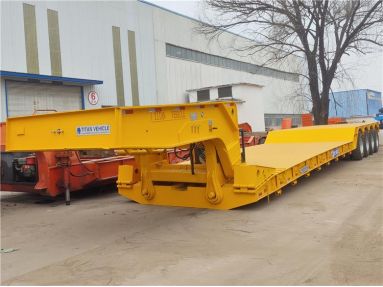
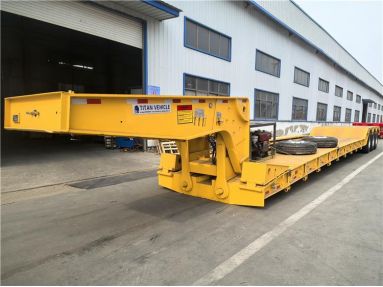
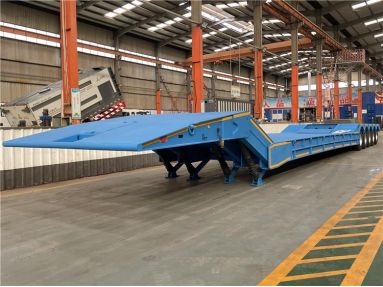
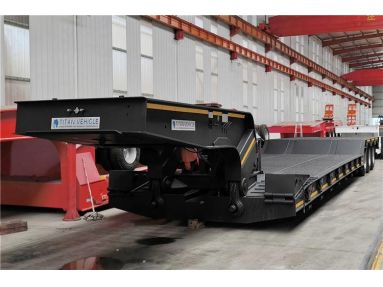
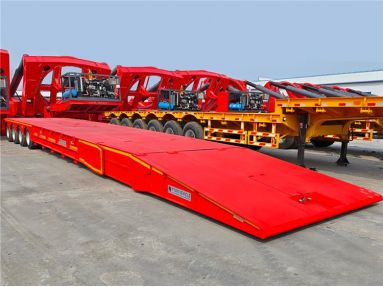
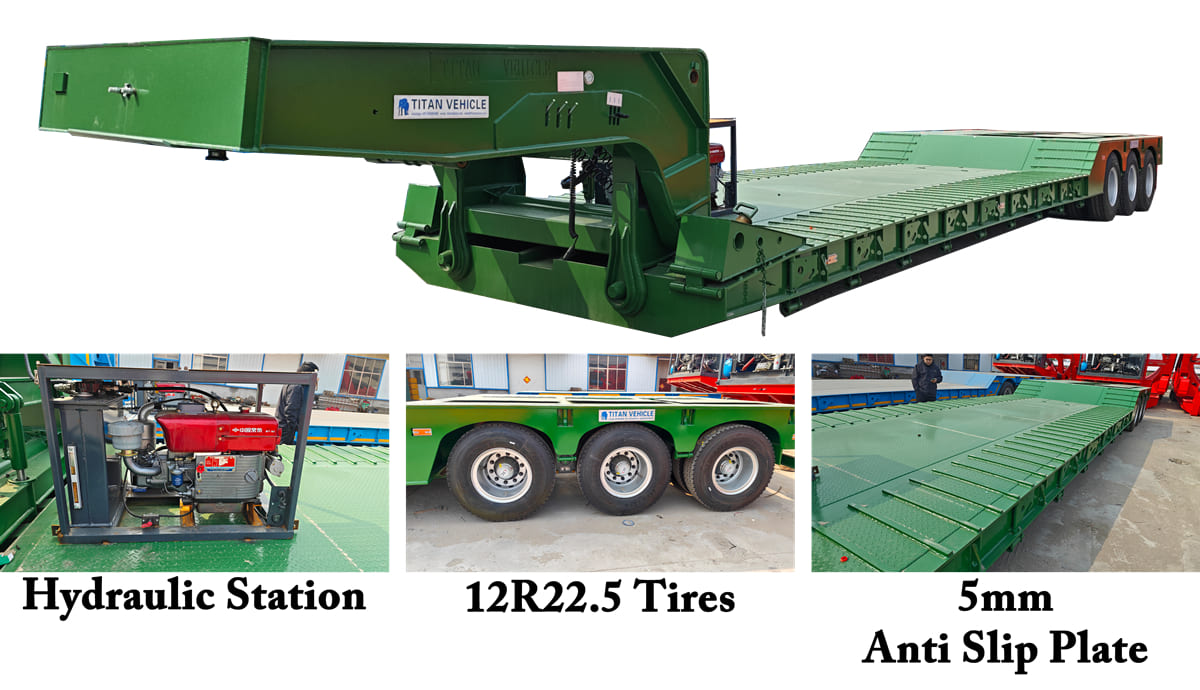
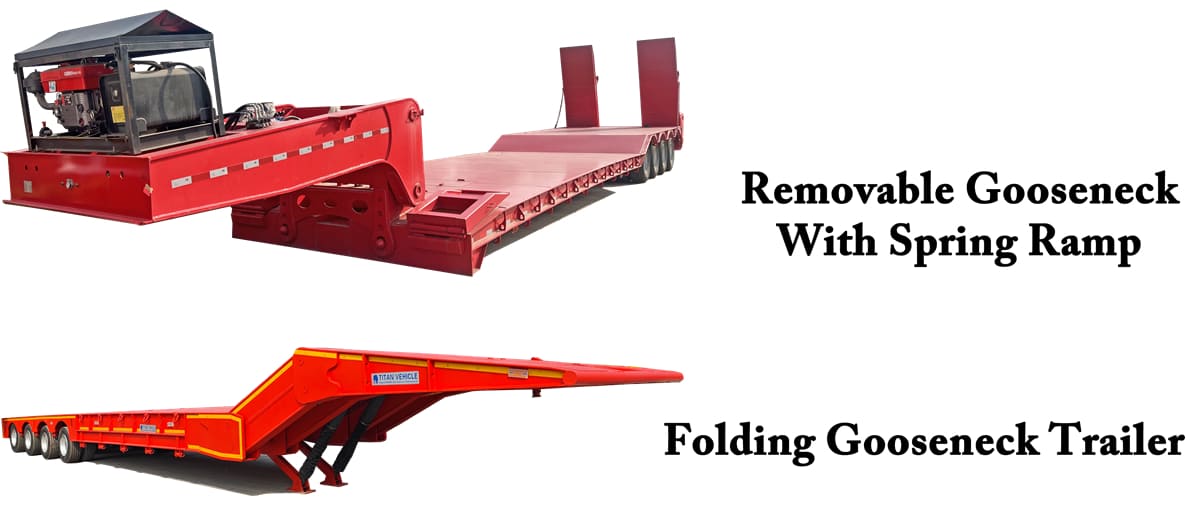
The biggest feature of a hydraulically detachable gooseneck is that the front gooseneck can be automatically disassembled via a hydraulic system, creating a low-angle ramp. Construction machinery can be driven directly onto or off the trailer from the front without the need for additional lifting equipment.
This is extremely practical for many mining areas and construction sites in Guyana. Because many construction sites have limited resources, lacking large cranes and standardized loading and unloading platforms, using traditional low flatbeds not only wastes time but also poses safety risks. Hydraulic gooseneck lowboy trailers can quickly complete loading and unloading, greatly improving transportation efficiency.
For many transportation companies, time is profit. Especially in mining areas or large-scale engineering projects, the loss from a single day of equipment downtime can far exceed the transportation costs. A hydraulically detachable gooseneck lowboy trailer helps customers complete equipment transportation faster, reduce waiting time, and increase vehicle turnaround time. Many customers have found that while the initial purchase cost of a detachable gooseneck trailer is higher than that of a regular low flatbed, the overall return on investment is actually higher in the long run.
Furthermore, road conditions in many parts of Guyana are far from ideal. Besides main urban roads, many mining roads, rural roads, and even temporary construction roads suffer from potholes, mud, and steep inclines. If the chassis of a detachable gooseneck trailer is too high, the equipment's center of gravity becomes unstable, increasing the risk of swaying or even tipping over.
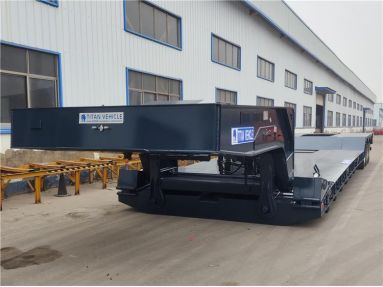
One of the biggest advantages of a hydraulically detachable gooseneck low flatbed is its ultra-low platform design. The low platform not only lowers the overall center of gravity but also improves transport stability, making it safer and more reliable even when transporting large tracked equipment.
The advantages of a low platform are particularly evident when transporting very tall equipment. Many countries have strict restrictions on transport height; if the vehicle platform is too high, it is prone to exceeding height limits, requiring additional permits or even detours.
Low flatbeds, with their lower platform height, effectively reduce the overall transport height, making transportation more convenient for customers. This is a key reason why more and more mining companies and large engineering contractors are opting for hydraulic gooseneck low flatbed trailers.
Besides transport stability, load-bearing capacity is also a major concern for customers. Many Guyanese customers transport large construction machinery, typically weighing 40, 60, or even over 100 tons. Therefore, the strength of the vehicle chassis and its load-bearing structure are crucial.
High-quality detachable gooseneck trailers are usually made of high-strength steel, such as Q550 or T700 high-strength steel. This type of steel not only has higher strength but also reduces the vehicle's weight, increasing its payload capacity.
The reinforced main beam structure design of detachable gooseneck trailers effectively distributes pressure, improving overall vehicle durability. For customers who frequently transport mining equipment or large equipment, this translates to a longer service life and lower maintenance costs.
The hydraulic system itself is also an important factor for customers. Many customers worry about the complexity of hydraulic systems and the difficulty of maintenance. In reality, high-quality detachable gooseneck trailers typically use mature and stable hydraulic systems that are easy to operate and have a low failure rate. Hydraulic disassembly can be completed independently by one person, significantly reducing labor costs. For transportation companies, this convenience can significantly improve operational efficiency.
Furthermore, many detachable gooseneck trailers now support wireless remote control or centralized control, allowing drivers to more easily disassemble and connect the gooseneck. Compared to traditional manual operation, this is not only safer but also reduces operational errors. The advantages of hydraulic systems are particularly evident in inclement weather or complex construction environments.
In the Guyana market, many customers also highly value vehicle adaptability. Because the types of transported equipment are diverse—sometimes excavators, sometimes bulldozers, and sometimes transformers or large steel structures—a versatile low flatbed is highly desirable.
Detachable gooseneck trailers typically support multiple axle configurations, such as 2-axle, 3-axle, 4-axle, or even multi-axle hydraulic module combinations, and can be customized to meet customer transportation needs.
If customers are transporting large mining equipment, they can choose a 4-axle or 5-axle low flatbed to increase load capacity. If the transportation needs are mainly for medium-sized equipment, a 3-axle low flatbed can meet most transportation requirements. This flexibility allows customers to expand their business in the future without frequently replacing equipment.
In recent years, China's heavy-duty semi-trailer manufacturing technology has improved rapidly. Whether it's welding processes, hydraulic systems, or overall vehicle corrosion resistance, it now meets international market demands. Many detachable gooseneck trailers exported to South America, Africa, and the Middle East have accumulated rich experience in harsh working conditions. For customers in Guyana, this means obtaining reliable and durable transport equipment at a more reasonable price.
Detached gooseneck trailers typically employ sandblasting, primer corrosion protection, and polyurethane topcoat processes to improve the vehicle's corrosion resistance.
For transport companies, a good detachable gooseneck trailer is not just a means of transportation, but also a crucial piece of equipment for enhancing competitiveness. While others are still spending considerable time loading and unloading equipment, you've already completed your transport and started the next trip; while others are hesitant to take on large equipment transport due to vehicle stability issues, you can easily complete high-profit projects; while others are frequently undergoing repairs due to equipment failures, your vehicles remain operational stably. This difference ultimately translates directly into profits.
Therefore, in the Guyana market, more and more customers are realizing that choosing a Hydraulic detachable gooseneck lowboy trailer is not just buying a lowboard unit, but investing in future business development. It helps customers improve transportation efficiency, reduce operating costs, enhance transportation safety, and adapt to larger and more complex future transportation needs. For customers looking to develop their heavy transport business in the long term, this detachable gooseneck trailer has become an increasingly important choice.
 Why Choose a Hydraulic Detachable Gooseneck Lowboy Trailer in Guyana
In the global heavy machinery transportation and logistics industry, the detachable gooseneck trailer is undoubtedly the crown jewel. It not only represents the highest efficiency in engineering machinery transportation but also embodies the modern logistics' ultimate pursuit of safety, convenience, and versatility.
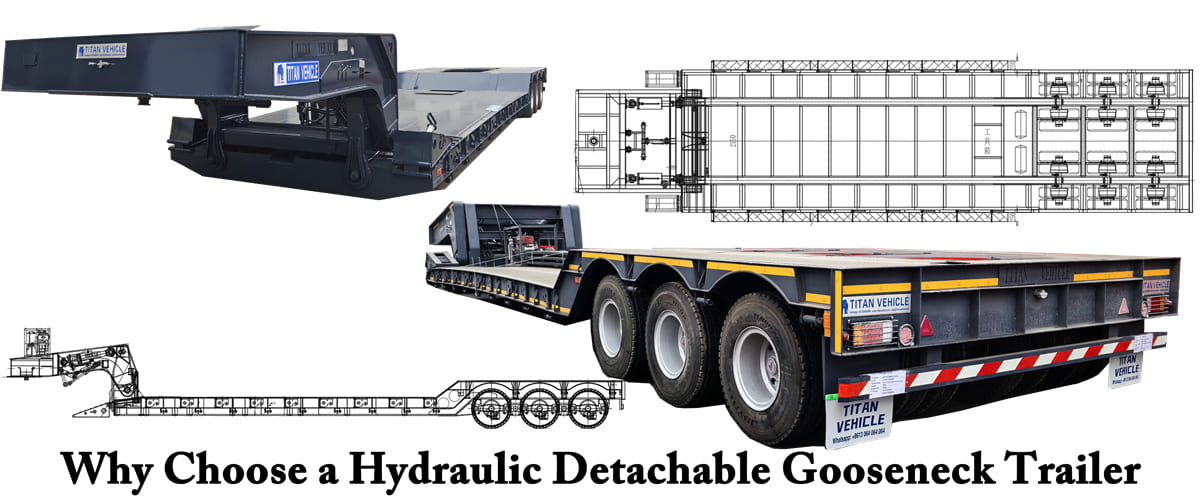
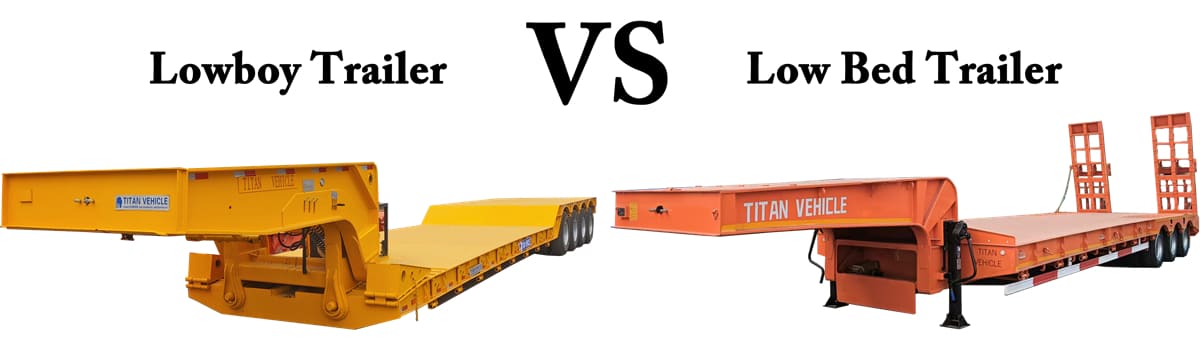
The most significant feature of the hydraulic detachable gooseneck lowboy trailer lies in its innovative mechanical structure design, which completely revolutionizes traditional loading methods. Traditional low-bed trailers typically require equipment to climb from a rear ramp, which not only places strict demands on the equipment's climbing ability but also easily leads to bottoming-out damage when dealing with machinery with extremely low chassis (such as road milling machines). The design essence of the detachable gooseneck trailer lies in "front loading." Through a hydraulic system or mechanical operation, the gooseneck section of the tractor unit can completely detach from the trailer body and drive away. At this point, the front end of the trailer descends directly to the ground, forming a natural entry channel with a very gentle slope, smoothness, and width. This design not only greatly simplifies the loading process but also fundamentally solves the risk of rollover when high-center-of-gravity equipment operates on inclined ramps.
Safety is the lifeline of heavy transport. The hydraulic detachable gooseneck lowboy trailer excels in center-of-gravity control. Due to its extremely low deck design, typically with a ground clearance of only tens of centimeters, the center of gravity of the hydraulic detachable gooseneck lowboy trailer is significantly reduced. At high speeds, during sharp turns, or when traversing uneven surfaces, a low center of gravity translates to greater lateral stability. For heavy equipment whose height is close to traffic limits, every centimeter of height reduction is crucial. This not only allows the detachable gooseneck trailer to pass smoothly over various height-restricted bridges and tunnels, avoiding costly detours, but also reduces safety hazards caused by excessive height. Simultaneously, the low-platform structure uses high-strength alloy steel (such as HG60 or T700 grade steel), providing extremely high torsional strength and load-bearing capacity while ensuring a reasonable weight, ensuring that the frame will not undergo permanent flexural deformation under full load.
Hydraulic detachable gooseneck lowboy trailers are typically equipped with multi-axle steering systems and air suspension. The multi-axle design effectively distributes loads by increasing the contact area, protecting the road surface and meeting stringent axle load regulations in various countries. Air suspension acts like a "shock absorber" for expensive construction machinery, effectively absorbing road impacts and preventing damage to delicate machinery from severe bumps during long-distance transport.
From a long-term economic perspective, while the initial purchase cost of a hydraulic detachable gooseneck lowboy trailer is higher than that of a traditional fixed trailer, its overall return on investment (ROI) is remarkable. Firstly, it saves on labor costs; in front-loading mode, the operator can complete loading and unloading more confidently and quickly, without the need for multiple assistants or complex temporary ramps. Secondly, it reduces equipment wear and tear; the gentle approach angle protects the tracks, tires, and hydraulic system from excessive stress. Most importantly, the high residual value of RGNs makes them extremely resilient in the used market; as a significant capital investment, their superior durability and brand premium provide a solid asset guarantee for businesses.
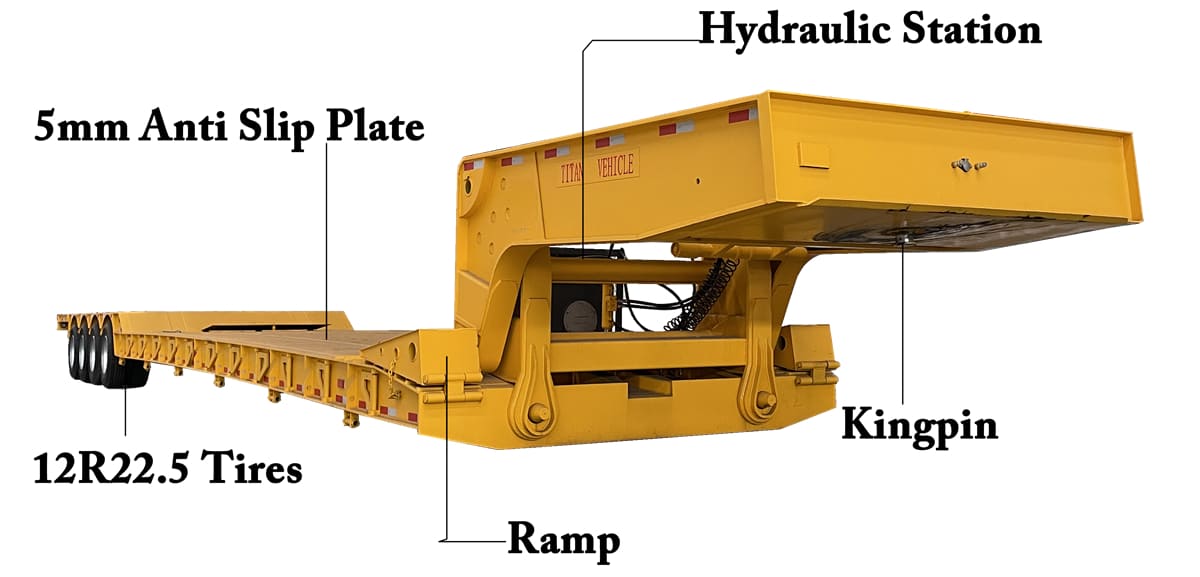
The anti-slip working platform surface, multi-point reinforced D-Rings, pre-installed hydraulic quick-connect fittings, and internationally standardized lighting and alarm systems are all designed to solve pain points in actual transportation, such as grip issues during loading and unloading in harsh environments like rain and snow, or reinforcement needs under varying loads.
In short, the hydraulic detachable gooseneck lowboy trailer is more than just a transport vehicle; it's a complete heavy-duty logistics solution. With its revolutionary front-loading convenience, extremely low center of gravity for safety, powerful load-bearing capacity, and intelligent adjustment system, it has become the preferred choice for global infrastructure construction, mining, and specialized logistics industries. Choosing RGN means choosing a more efficient loading and unloading process, a wider range of business adaptability, and a more forward-looking safety investment. In today's pursuit of refined operations and high-quality development, this transportation equipment with core technological advantages will undoubtedly become an indispensable and powerful driving force in your business development.
 Main Features and Advantages of Detachable Gooseneck Lowboy Trailers
Whether it's large excavators in mines, road rollers and bulldozers in road construction, or crawler cranes and steel structure equipment in port construction, specialized heavy-duty transport vehicles are essential for transportation. Detachable gooseneck trailers are gradually becoming one of the most important transport tools in Guyana's heavy equipment transportation industry.
In Guyana, many engineering projects are not concentrated in cities but are distributed in mining areas, mountains, forests, and remote construction sites. These areas have complex road conditions; many places lack standard highways, and a large number of transport routes are dirt roads, gravel roads, or temporary construction roads. In such transport environments, ordinary semi-trailers often cannot meet the needs of heavy equipment transportation, while hydraulic detachable gooseneck lowboy trailers, with their ultra-low platform, high load-bearing capacity, and superior maneuverability, are better suited to local working conditions.
The application of detachable gooseneck trailers is very widespread in the mining transportation sector. Guyana boasts abundant gold, bauxite, and other mineral resources, creating a significant demand for equipment transportation within its mining areas. Mining equipment is typically massive and heavy, including large tracked excavators, mining bulldozers, mining loaders, and crushing equipment, which are difficult to transport using ordinary trailers. Hydraulic detachable gooseneck lowboy trailers, with their ultra-low platform design and high-strength load-bearing structure, can safely transport various large mining machinery.
The advantages of detachable gooseneck trailers are particularly evident during transport within mining areas. Mining roads are often steep and in poor condition, requiring transport vehicles not only with strong load-bearing capacity but also superior stability. Low-bed trailers, with their lower center of gravity, maintain stability even when transporting large equipment on rough terrain, reducing the risk of equipment swaying and tipping over. For mining companies, equipment is often highly valuable, and accidents during transport can result in substantial losses; therefore, they prefer the safer hydraulic low-bed trailers.
Furthermore, the rapid pace of construction in mining areas necessitates frequent transfers of equipment between different mining sites. Inefficient loading and unloading can significantly impact the overall construction schedule. The hydraulically detachable gooseneck lowboy trailer allows tracked equipment to be loaded and unloaded directly without additional lifting equipment, significantly improving transportation efficiency. Many mining environments lack the conditions for large-scale lifting, and the hydraulic lowboy trailer solves this problem perfectly. The driver only needs to operate the hydraulic system to quickly complete loading and unloading, drastically reducing labor and time costs.
The application of hydraulically detachable gooseneck lowboy trailers in the road construction industry is equally important. In recent years, the Guyanese government has continuously increased investment in infrastructure construction, with numerous highway, bridge, and urban road projects underway. These projects require a large number of large construction machines, such as road rollers, pavers, graders, and large excavators. However, these machines are not suitable for long-distance self-driving, as it is not only slow but also causes severe wear and tear on the chassis and tracks. Therefore, transportation companies typically use hydraulically detachable gooseneck lowboy trailers for transport.
For road construction companies, time and equipment utilization are crucial. If a piece of equipment cannot quickly reach the construction site, it means that the project schedule will be affected. Hydraulic low-bed trailers enable rapid equipment loading and unloading, improving equipment relocation efficiency and allowing construction companies to complete more projects in a shorter time. Simultaneously, low-bed transport reduces equipment wear and tear, lowering maintenance costs.
In the port and dock construction sector, hydraulic detachable gooseneck lowboy trailers also play a crucial role. With Guyana's rapid economic development, the demand for port expansion and logistics infrastructure construction is constantly increasing, requiring the transport of large steel structures, port equipment, and crawler cranes. Due to the large size and weight of this equipment, ordinary transport vehicles cannot meet the requirements, while hydraulic low-bed trailers can easily handle them.
Especially when transporting large steel structures and extra-long equipment, the length and width of detachable gooseneck trailers can be customized according to customer needs, thereby improving transport flexibility. At the same time, the low-platform design reduces the overall transport height, avoiding over-height issues and making transport more convenient. For port engineering companies, this transport capability effectively improves project construction efficiency.
In the oil industry, the demand for hydraulic detachable gooseneck lowboy trailers is also growing rapidly. In recent years, the rapid development of offshore oil in Guyana has driven a surge in demand for transporting oilfield engineering equipment. The oil industry typically requires the transport of heavy equipment such as large generators, drilling rigs, oilfield machinery, and large storage tanks. This equipment is not only heavy but also demands extremely high stability during transport.
Since oil projects are often located in remote areas with complex road conditions, transport vehicles must possess strong adaptability. Hydraulic low-bed trailers can maintain stable transport in muddy, rugged, and steep road environments, while their low platform design also makes transporting large equipment safer. Many oilfield engineering companies prioritize hydraulic low-bed trailers when selecting transport solutions because they reduce the risk of equipment damage and improve transport safety.
Especially during the busy farming season, agricultural equipment needs to be moved quickly to improve operational efficiency. Hydraulic detachable gooseneck lowboys help agricultural businesses transport equipment rapidly, reducing downtime and thus increasing agricultural productivity. For agricultural contractors, this transport capability allows them to secure more farmland projects.
In wind power and energy projects, the role of hydraulic detachable gooseneck lowboys is also becoming increasingly important. With the development of the global new energy industry, more and more large wind power equipment needs to be transported, including wind turbine towers, transformers, and large generating units. Although Guyana's wind power market is not particularly large at present, its future energy infrastructure development potential is enormous, and hydraulic low-bed flatbeds will become one of the important transport tools.
From the perspective of transport companies, hydraulic detachable gooseneck lowboys are not only a transport device but also an important asset for enhancing market competitiveness. Transport companies with high-quality hydraulic low-bed flatbeds can undertake more high-value heavy transport projects, not just limited to general cargo transport. This means that companies can enter the more profitable heavy equipment transport market and improve overall profitability.
Furthermore, one of the biggest advantages of hydraulic detachable gooseneck lowboys for many customers is their high transport flexibility. Different projects require a wide variety of equipment, and hydraulic lowboys can adapt to diverse transport needs, transporting tracked equipment, wheeled equipment, oversized equipment, and overwidth equipment through various configurations. This flexibility allows customers to meet diverse project requirements without needing to purchase multiple different vehicle types, significantly reducing investment costs.
In long-term operation, hydraulic detachable gooseneck lowboys also help customers reduce overall transport costs. High-strength steel structures and mature hydraulic systems mean that hydraulic detachable gooseneck lowboys are more durable, reducing failure rates and maintenance frequency. At the same time, higher loading and unloading efficiency and better transport stability also reduce labor costs and accident risks. This comprehensive advantage is crucial for companies that have long been engaged in heavy equipment transport.
Therefore, in the Guyanese heavy equipment transport market, it is no longer just an ordinary transport tool, but an indispensable piece of equipment for industries such as mining, road construction, port engineering, oil development, and agricultural transport. Hydraulic detachable gooseneck lowboys help customers improve transportation efficiency, reduce operating costs, and enhance transportation safety, while also giving businesses a greater competitive edge in the future market. As Guyana's infrastructure continues to develop, the application of hydraulic detachable gooseneck lowboys will further expand, making them an increasingly important core piece of equipment in the heavy transport industry.
 Applications of Hydraulic Lowboy Trailers for Heavy Equipment Transport in Guyana
The primary starting point for choosing a detachable gooseneck trailer is a thorough analysis of your core cargo attributes. You need to accurately assess the maximum weight, dimensions, and weight distribution characteristics of the equipment being transported. The maximum load capacity of hydraulic detachable gooseneck lowboy trailers is typically graded, ranging from common 35 tons and 50 tons to ultra-heavy-duty 80 tons or even hundreds of tons.
Besides load capacity, size selection is also crucial in defining business boundaries. Deck length directly determines the types of cargo you can handle. While a longer deck can transport longer equipment, it also increases the vehicle's turning radius and weight, impacting fuel economy and maneuverability in narrow work areas. Therefore, finding a balance is essential. Deck height is another key indicator. A major advantage of hydraulic RGNs is their extremely low ground clearance, which is crucial for transporting very tall equipment. You need to examine whether the deck height, when fully loaded, allows you to easily pass over height-restricted bridges on your target route. Simultaneously, examine the effective width of the loading platform and whether it is equipped with reliable lateral swing outriggers. These outriggers provide necessary support when transporting oversized equipment, and can retract when empty or transporting standard-width cargo, ensuring compliant operation.
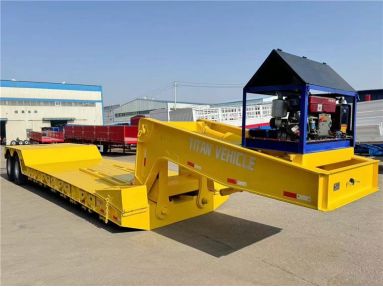
An excellent hydraulic system should be powerful, smooth in operation, and easy to maintain. You need to know whether the gooseneck's hydraulic power source comes from the tractor's power take-off (PTO) or the trailer's own auxiliary power unit (APU, usually a small diesel engine). If your tractor fleet is not uniform, trailers with their own power units will offer greater dispatch flexibility. Furthermore, the adjustability of the gooseneck is crucial. A high-quality detachable gooseneck trailer allows for fine-tuning of the platform's ground clearance via hydraulic levers, which is extremely valuable when traversing rough terrain or overcoming obstacles. Also, observe the locking mechanism at the connection between the gooseneck and the loading platform; automatic pin locking systems are safer and more efficient than manual locking, significantly reducing loading and unloading time and lowering operator workload.
The choice of axle configuration and suspension system directly affects ride quality and road accessibility. Depending on your region's axle load regulations, you'll need to decide whether to choose a two-axle, three-axle, or multi-axle configuration with self-steering. Air suspension is now standard on high-end detachable gooseneck trailers, providing a smoother ride, protecting valuable machinery from vibration damage, and allowing the driver to adjust the vehicle height when necessary.
Safety and attention to detail often reflect a product's true quality. When purchasing, carefully inspect the frame's welding process; ensure the welds are uniform and free of porosity, as this determines the structural fatigue life under long-term high-load operation. Anti-slip cargo platform surfaces, ample and well-placed tie-down points (D-rings), high-brightness LED lighting systems, and clear electrical and air circuit layouts—these seemingly minor details translate into shorter operating times and lower safety risks in actual operation. The braking system, in particular, must be equipped with a high-quality ABS or EBS system to handle emergency braking demands under heavy loads.
Finally, customization capabilities are also an important criterion for evaluating a supplier's quality. Every business has its unique circumstances. Whether it's specific painting requirements, a particular toolbox layout, or chassis reinforcement for special road conditions, manufacturers who can provide tailored solutions are often better able to understand your business pain points.
Choosing the right hydraulic detachable gooseneck lowboy trailer is a multi-dimensional decision-making process. It requires a deep analysis of your own business, rigorous comparison of load parameters, thorough examination of hydraulic technology, attention to the regulatory compliance of the driving mechanism, and ultimately, a focus on the pursuit of detail quality and service assurance.
 How to Select the Right Hydraulic Detachable Gooseneck Trailer for Your Business
For many Guyanese customers, when purchasing detachable gooseneck trailers (hydraulic detachable gooseneck lowboy trailers), two main concerns are typically raised: price and how to safely and efficiently transport them from China to Guyana. Because these heavy-duty lowboy trailers are not only large pieces of equipment but also oversized, overlength, and overweight, the transportation plan and packaging methods directly impact the customer's final purchase cost and the trailer's usability upon arrival at the port.
In reality, the price of a hydraulic detachable gooseneck lowboy trailer is not fixed and is influenced by many factors. These include the number of axles, load capacity, platform length, hydraulic system configuration, steel grade, suspension type, and customer customization requirements, all of which directly affect the final quote. In the Guyana market, common customer demands focus on 3-axle, 4-axle, and multi-axle hydraulic low-bed trailers, typically with load capacities ranging from 60 to 120 tons. These are primarily used for transporting excavators, bulldozers, mining equipment, and large construction machinery.
Generally, standard-configuration hydraulic detachable gooseneck lowboy trailers are relatively inexpensive. Prices increase accordingly for higher tonnage, longer platforms, or more complex hydraulic systems. For example, some mining customers need to transport large tracked equipment or heavy machinery, thus opting for reinforced main beam structures, thicker steel plates, and hydraulic steering axles. While these configurations increase procurement costs, they significantly improve vehicle durability and transport stability.
Many customers initially perceive detachable gooseneck trailers as considerably more expensive than standard low-bed trailers. However, after actual use, they discover that the long-term value of hydraulic gooseneck low-bed trailers far surpasses that of ordinary trailers. This is because they improve loading and unloading efficiency, reduce labor costs, minimize equipment damage risks, and can handle higher-profit large equipment transport projects. In the long run, this investment can actually help transportation companies achieve higher returns.
Besides the price of the hydraulic detachable gooseneck lowboy trailer itself, transportation costs are also a crucial factor for customers. Since the Hydraulic Detachable Gooseneck Lowboy Trailer is a large semi-trailer, international shipping options are critical. Currently, hydraulic lowboy trailers exported from China to Guyana are mainly transported using two methods: RO-RO Ship (Ro-Ro Ship) and Container Ship (Container Ship).
RO-RO Ship is one of the most common and suitable methods for transporting large lowboy trailers. The biggest advantage of RO-RO Ships is that vehicles can be driven directly into the hold without disassembly or hoisting. This method is very safe for large lowboy trailers and effectively reduces the risk of scratches and damage during loading and unloading.
During RO-RO Ship transport, the hydraulic lowboy trailer is usually towed directly into the hold by a tractor, and then secured by a professional lashing team using steel cables, chains, and fixing devices to ensure the vehicle does not move during sea transport. Because Ro-Ro ships are specifically designed for transporting vehicles and large machinery, RO-RO transport is generally more stable and safer for large low flatbeds.
For many Guyanese customers, the biggest advantage of Ro-Ro ships is the rapid pickup and deployment of vehicles upon arrival. Vehicles do not require reassembly or complex unloading operations; they can be directly towed away from the port by a tractor. This mode of transport is particularly suitable for large-scale engineering projects, as it shortens delivery cycles and improves equipment deployment efficiency.
Furthermore, Ro-Ro ships are more adaptable to extra-long and extra-wide low flatbeds. Many large detachable gooseneck trailers cannot fit into standard containers due to their excessive length or width, but this is not a problem with Ro-Ro ships. Whether it's a 3-axle, 4-axle, or multi-axle hydraulic low flatbed, it can be transported directly via RO-RO.
During actual shipment, manufacturers typically conduct a comprehensive inspection of the hydraulic detachable gooseneck lowboy trailer before it leaves the factory. This includes hydraulic system testing, lighting and wiring checks, tire pressure checks, and gooseneck disassembly testing to ensure the trailer is in optimal condition before shipment. Subsequently, the vehicle undergoes rust and seawater protection treatment. Due to the high humidity and salt content during sea transport, the vehicle's surface is easily corroded by sea winds without anti-corrosion protection.
TITAN applies rust-preventive wax to the detachable gooseneck trailer before shipment, wraps critical hydraulic components with waterproof plastic film, and provides additional sealing to electrical wiring and interfaces. The hydraulic and braking systems, in particular, receive special protection to ensure the vehicle remains in good condition upon arrival in Guyana.
Besides RO-RO transport, some customers also choose container shipping. Container shipping is typically suitable for smaller or detachable hydraulic low-flatbeds. For example, some 2-axle or short-platform low-flatbeds can be loaded into a 40HQ container after removing the gooseneck, tires, or some structural components.
The biggest advantage of container shipping is its superior sealing during transport, which better protects vehicles from direct contact with sea winds and rain. Furthermore, container shipping prices on some routes are sometimes more favorable than roll-on/roll-off (Ro-Ro) shipping, especially during off-peak seasons.
However, for large detachable gooseneck trailers, container shipping typically requires disassembly and repackaging. Manufacturers will develop a loading plan based on the vehicle's dimensions, such as removing the gooseneck, tires, and lowering the vehicle's height to ensure successful container loading.
During packing, manufacturers usually use steel frames, wooden supports, and straps for reinforcement to prevent components from shifting during sea transport. Critical components such as hydraulic lines, electrical wiring, and hydraulic joints are also given extra protection. Many manufacturers also add moisture-proof materials inside the container to reduce the impact of moisture on the vehicle during sea transport.
For customers, the choice between Ro-Ro and Container Ship usually depends on a combination of factors, including vehicle size, shipping budget, and delivery time. If the vehicle is large and heavy, Ro-Ro shipping is generally a better choice because it eliminates the need for disassembly and offers higher transport efficiency. If customers are purchasing smaller low-bed trailers or wish to reduce transportation costs, container shipping is a good option.
Furthermore, many customers worry about customs clearance and port issues during the procurement process. In reality, the transportation of heavy-duty semi-trailers from China to Guyana is very mature. Manufacturers typically provide complete export documentation, including commercial invoices, packing lists, bills of lading, certificates of origin, and vehicle-related information, helping customers complete customs clearance smoothly.
Some experienced manufacturers can also assist customers with port pickup and local transportation arrangements, which is especially helpful for first-time importers of low-bed trailers, reducing many hassles. Large low-bed trailers require specialized tractors and transportation permits for port pickup, and experienced export teams can usually help customers arrange the relevant procedures in advance.
One of the biggest concerns for many customers during actual transportation is whether the vehicle will be damaged during sea freight. In fact, professional manufacturers usually take detailed photos and videos before shipment, including the vehicle's exterior, chassis, hydraulic system, and lashing, allowing customers to clearly understand the vehicle's loading condition.
Professional lashing is particularly important for roll-on/roll-off (Ro-Ro) shipping. High-quality manufacturers typically use multi-point securing methods to ensure vehicle stability during long sea voyages. Some customers even request additional tarpaulin coverage for further protection.
Hydraulic Detachable Gooseneck Lowboy Trailer Price and Shipping to Guyana