1. Flatbed Trailer vs Low Bed Trailer: What Are the Differences?
2. How Does a Flatbed Trailer Work?
3. What Type Of Cargo (Containers, Heavy Machinery, Bulk Goods) You Need To Haul?
4. Which Trailer Is Best For Heavy Equipment Transport Methods?
5. What Makes A Lowbed Trailer The Best Choice For Heavy Machinery?
6. How Do Flatbed Trailer Advantages Compare To Lowbed Trailer Advantages?
7. What Are The Different Trailer Types For Cargo?
8. How Do You Select The Suitable Trailer For Your Cargo?
9. What Are The Best Equipment Hauling Options Available?
10. Are You Looking For New Or Used Trailers?
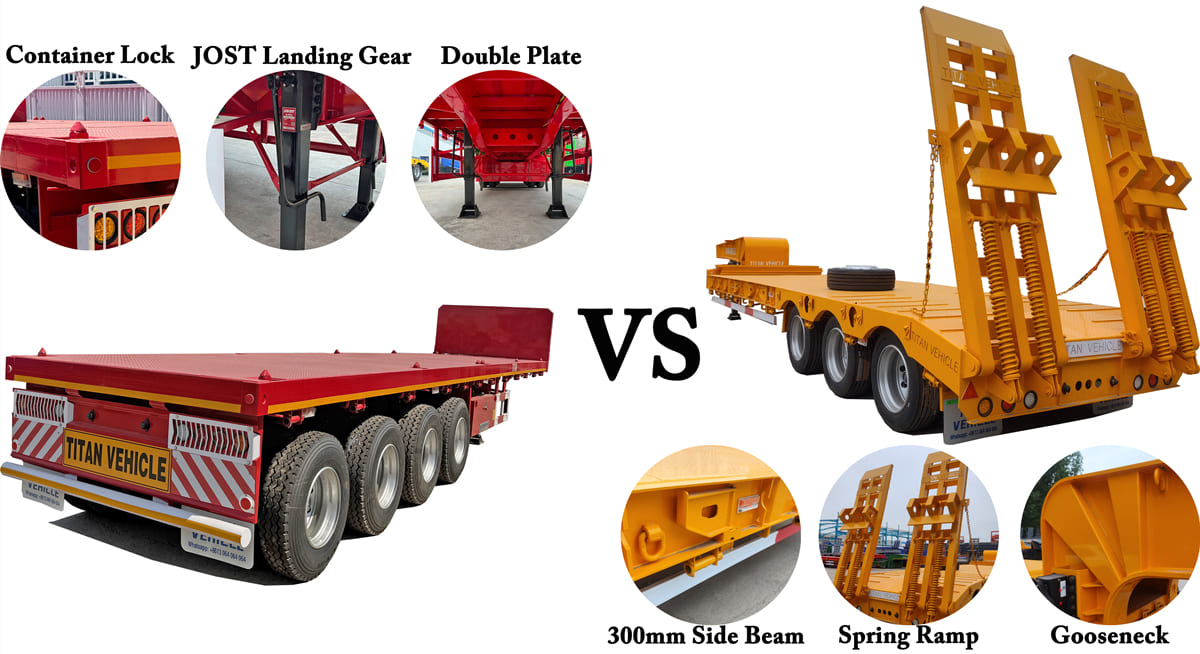
The biggest difference between flatbed trailers and low bed trailers lies in their purpose. Flatbed trailers are mainly used for transporting general cargo such as containers and steel, while low-bed trailers are mainly used for transporting large construction machinery such as excavators and mining equipment.
| Comparison | Flatbed Trailer | Low Bed Trailer |
|---|---|---|
| Deck Height | Higher platform | Lower platform |
| Main Purpose | General cargo transportation | Heavy equipment transportation |
| Loading Method | Crane or forklift loading | by the rear ladder |
| Cargo | Containers, steel, pipes | Excavators, bulldozers, mining machines |
| Stability | Normal | Higher due to low center of gravity |
| Typical Capacity | 30-80 tons | 40-150+ tons |
What is a Flatbed Trailer?
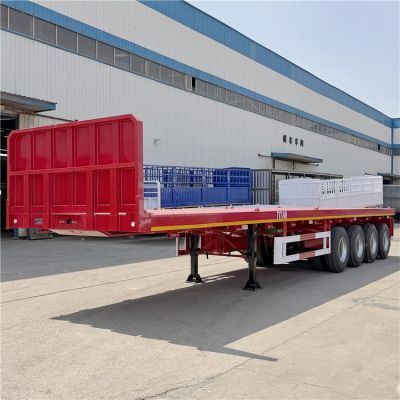
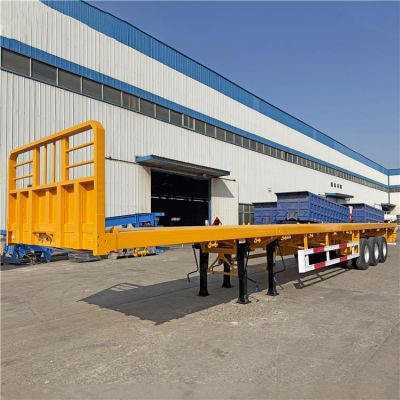
The flatbed trailer is a semi trailer with a flat and open cargo platform. flatbed trailer is commonly used for transporting containers, steel products, timber, pipes, and bulk cargo.
What is a Low Bed Trailer?
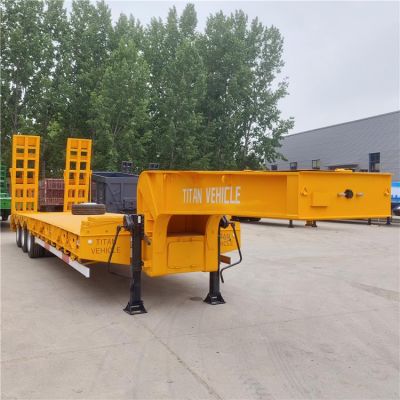
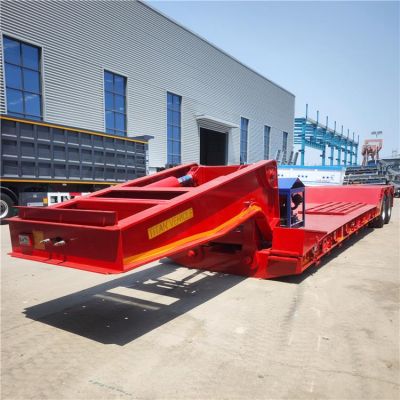
The low bed trailer is a heavy-duty semi trailer designed with a lower deck height. Low bed trailer is mainly used for transporting oversized and overweight equipment such as excavators, loaders, cranes, and mining machinery.
Main Differences Between Flatbed Trailer and Low Bed Trailer
1. Height Difference
The biggest difference is the deck height.
Flatbed trailer: Higher loading platform, Suitable for normal cargo
Low bed trailer: Lower loading platform, Allows transportation of taller equipment while keeping total vehicle height within legal limits
2. Cargo Difference
Flatbed Trailer Applications:20ft and 40ft containers, Steel coils, Construction materials, Pipes, General cargo
Low Bed Trailer Applications: Excavators, Bulldozers, Mining equipment, Agricultural machinery, Heavy construction equipment
3. Structure Difference
Flatbed trailers usually feature: Flat deck design, Simple structure, Lower maintenance cost
Low bed trailers usually feature: Lower deck height, Reinforced main beam, Hydraulic ramp, Detachable gooseneck option, Heavy-duty suspension
The difference between a flatbed trailer and a low bed trailer mainly comes down to cargo type, deck height, and transportation purpose. A flatbed trailer is a versatile solution for everyday logistics, while a low bed trailer is designed for heavy-duty and oversized equipment transportation. Choosing the right trailer depends on your cargo weight, cargo dimensions, road conditions, and transportation requirements.
 Flatbed Trailer vs Low Bed Trailer: What Are the Differences
The 40 ft flatbed trailer for sale in Guyana works by providing an open and flat loading platform that allows cargo to be loaded from the rear, side, or top.
The open deck design makes it easier to transport different types of goods, including: 20 ft and 40ft containers, Steel coils , Pipes, Timber, Construction materials, Industrial equipment
40 ft flatbed trailer for sale are usually connected to a truck tractor through a fifth wheel coupling system. The 40 ft flatbed trailer for sale transfers cargo weight through the chassis, axles, and suspension system to maintain stable transportation.
Main Features:
Open cargo platform
Easy loading and unloading
High cargo flexibility
Lower maintenance cost
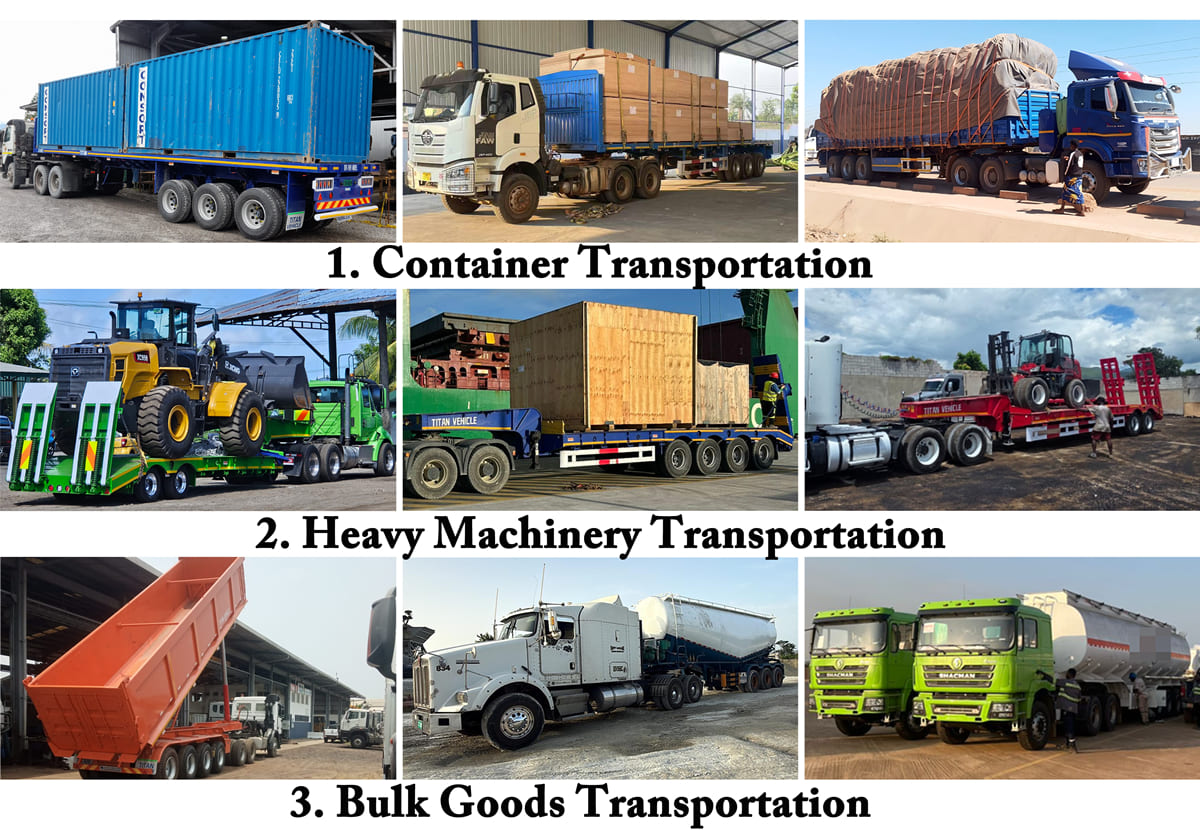
| Cargo Application | Recommended Trailer | Suitable Cargo & Details |
|---|---|---|
| 1. Container Transportation | Flatbed Trailer Container Chassis Trailer |
Suitable for: 20ft, 40ft, 45ft containers Common industries: International shipping, Port logistics, Freight transportation |
| 2. Heavy Machinery Transportation | Lowbed Trailer | Suitable for: Excavators, Bulldozers, Loaders, Cranes, Mining equipment * The low loading platform reduces the overall transportation height and improves stability. |
| 3. Bulk Goods Transportation | Tipper Trailer Cement Tanker Trailer Bulk Powder Tanker Trailer |
Suitable for: Sand, Coal, Cement, Minerals, Grain |
 How Does a Flatbed Trailer Work?
For heavy equipment transport, a lowbed trailer is usually the preferred solution.
A lowbed trailer provides:
Lower Deck Height: Heavy machinery is often very tall. A low platform helps keep the total vehicle height within transportation limits.
Higher Stability: The lower center of gravity reduces the risk of rollover when carrying heavy equipment.
Stronger Structure: Lowbed trailers usually use: Reinforced main beams, High-strength steel, Heavy-duty suspension, Multiple axle configurations
Common models include:
3 axle lowbed trailer, 4 axle lowbed trailer, 6 axle lowbed trailer, Hydraulic modular trailer
The lowbed trailer is designed specifically for transporting heavy-duty and oversized equipment such as excavators, bulldozers, wheel loaders, mining machines, and construction equipment. Compared with standard flatbed trailers, a lowbed trailer provides a lower loading platform, stronger chassis structure, and better stability for heavy cargo transportation.
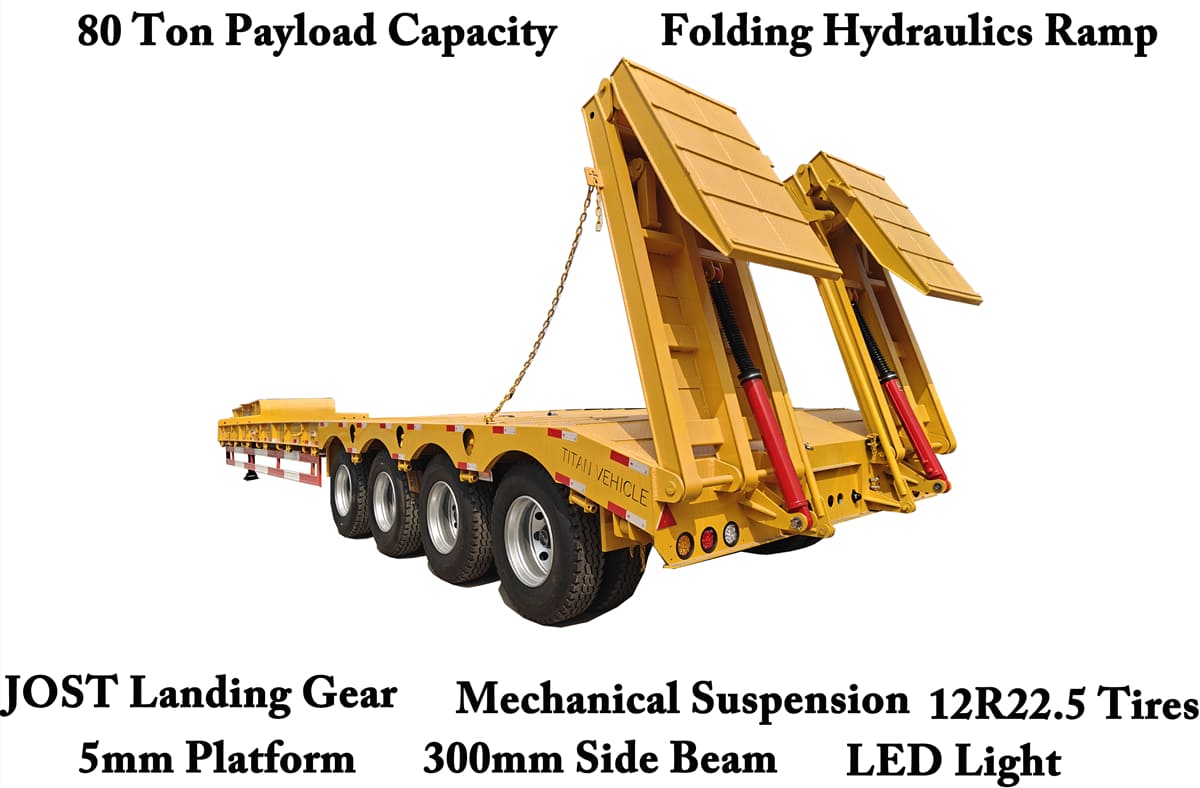
The 3 axle lowbed trailer truck is one of the most popular solutions for medium and heavy equipment transport. With a 60-80 ton loading capacity, it offers an excellent balance between payload capacity, maneuverability, and operating cost.
| Key Feature / Component | Specification & Details | Key Advantages & Benefits |
|---|---|---|
| 1. High Loading Capacity | 60-80 ton payload capacity | Suitable Cargo: Excavators, Bulldozers, Wheel loaders, Mining equipment, Agricultural machinery, Construction vehicles. Benefit: Reinforced lowbed structure distributes weight evenly for stable heavy-duty transport. |
| 2. Low Loading Height | Reduced platform height design | Lowers center of gravity, improves driving stability, reduces rollover risk, and allows easier transportation of tall equipment on highways and rough roads. |
| 3. Heavy-Duty Axles | 3 units of TITAN brand axles | Provides high load-bearing capacity, strong impact resistance, long service life, and easy maintenance. Balances payload capacity with road flexibility. |
| 4. Heavy-Duty Tires | 12 units of 12R22.5 tires | Distributes cargo weight evenly, reduces road pressure, improves driving stability, and increases tire service life across highways, construction, and mining areas. |
| 5. Mechanical Suspension | Heavy-duty mechanical suspension | Features strong impact resistance, simple durable structure, lower operating cost, and reliable performance on rough, off-road conditions. |
| 6. Leaf Spring System | 90mm × 13mm × 10-layer leaf springs | Enhances load support capacity and shock absorption, protects the frame, and reduces vibrations during heavy equipment transportation. |
| 7. Landing Gear | JOST brand landing gear | High strength, stable parking support, long service life, and highly reliable operation when uncoupled under heavy loads. |
| 8. Loading Ramp | Spring-assisted loading ramp | Enables faster drive-on loading/unloading directly from the ground, reduces reliance on external cranes, and lowers labor costs. |
| 9. Kingpin | JOST 2.0 or 3.5 inch kingpin | High tensile strength, secure tractor coupling, superior towing stability, ideal for heavy-duty long-haul operations. |
| 10. Braking System | WABCO braking valve system | Delivers reliable braking performance, quick response, enhanced safety under maximum loads, and reduced maintenance frequency. |
| 11. Lighting System | Full LED lighting system | Higher brightness, lower energy consumption, extended lifespan, and superior visibility for night driving safety. |
 Which Trailer Is Best For Heavy Equipment Transport Methods?
When choosing between a 40 ft flatbed trailer for sale and a lowbed trailer, the best option depends on the type of cargo, transportation environment, and operational requirements.
Although both trailers are designed for heavy-duty transportation, they serve different purposes. 40 ft flatbed trailer for sale focuses on versatility and efficient cargo handling, while a low bed trailer focuses on heavy equipment transportation, higher stability, and oversized load capability.
Flatbed Trailer Advantages
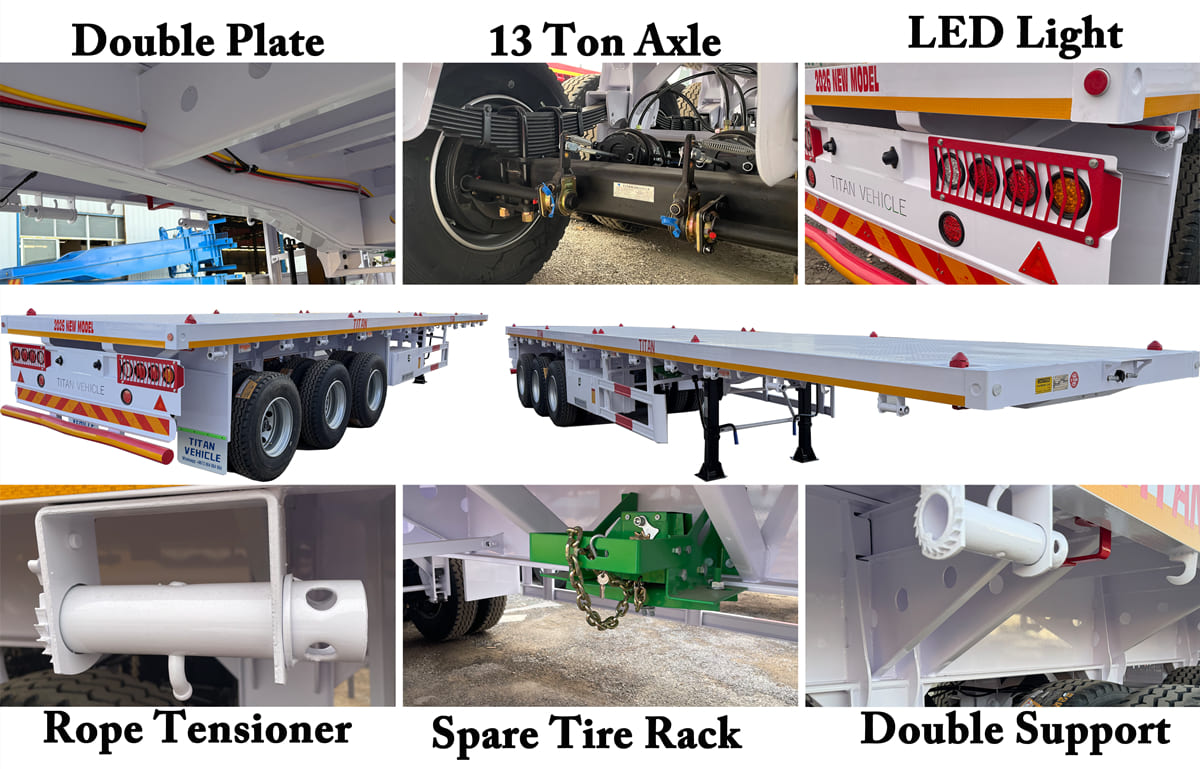
40 ft flatbed trailer for sale is one of the most widely used semi trailers in logistics and freight transportation. Its open platform design allows it to transport various types of cargo with flexible loading methods.
1. Higher Versatility For Different Cargo Types
The biggest advantage of a flatbed trailer is its universal application.
It can transport:20ft and 40ft containers, Steel coils, Steel pipes, Timber, Construction materials, Machinery parts, General cargo
40ft flatbed trailers in guyana provide open access from the rear, sides, and top, making loading and unloading much easier.
2. Flexible Loading And Unloading Methods
Flatbed trailers support multiple loading methods:,Crane loading from the top, Forklift loading from the side, Rear loading using ramps
This flexibility is especially useful in ports, warehouses, construction sites, and industrial transportation.
For companies transporting different types of cargo, one 40 ft flatbed trailer for sale can replace several specialized trailers.
3. Lower Purchase And Maintenance Cost
Compared with lowbed trailers, flatbed trailers usually have a simpler structure.
Lower manufacturing cost, Easier maintenance, Lower spare parts cost, Faster repair process
This makes flatbed trailers a popular choice for logistics companies that require daily transportation operations.
4. Better Road Efficiency For Long-Distance Transportation
Flatbed trailers generally have: Higher ground clearance, Standard suspension design, Better highway adaptability
They are suitable for International road transportation, Port-to-port logistics, and long-distance freight operations
For normal cargo transportation, 40ft flatbed trailers provide an excellent balance between efficiency and operating cost.
 Flatbed Trailer Advantages
Low Bed Trailer Advantages
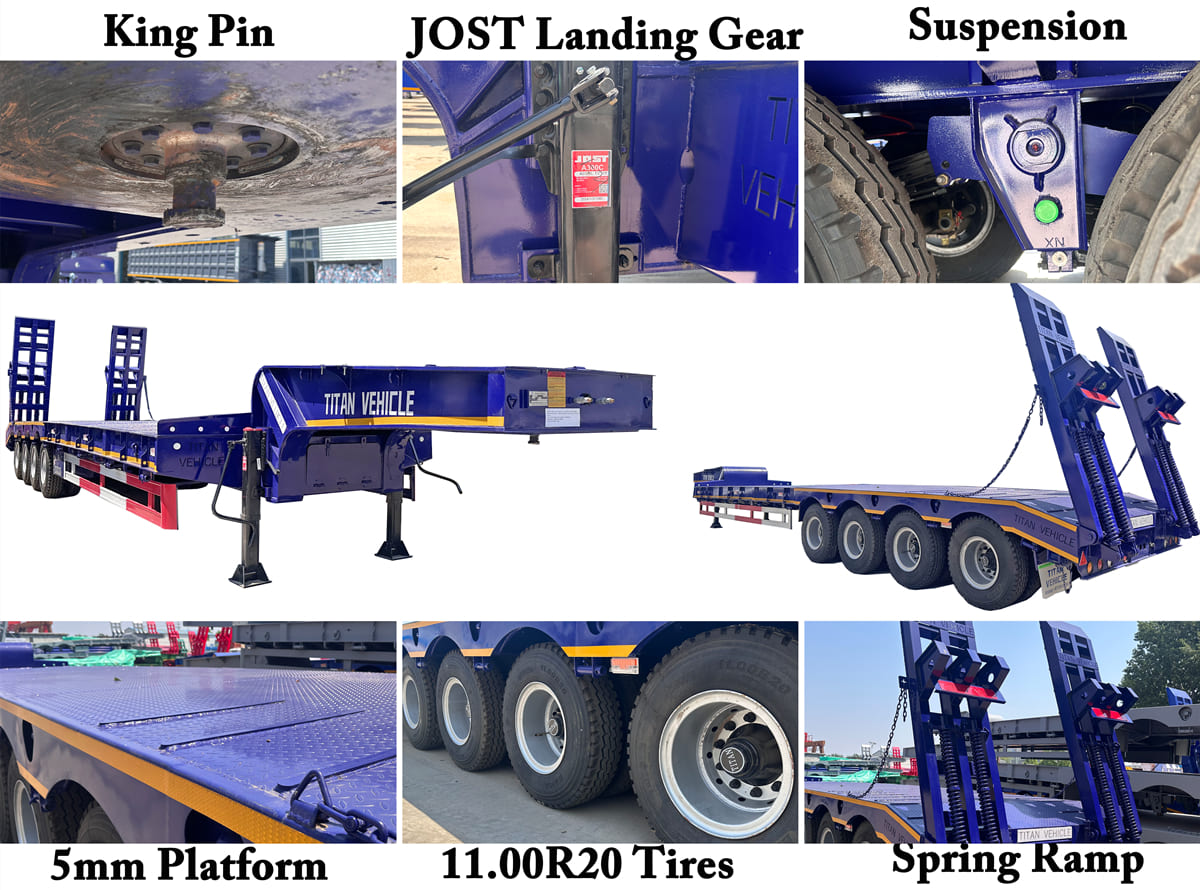
A lowbed trailer is specially designed for transporting heavy, oversized, and high-value equipment. Its main advantage is the ability to carry large machinery while maintaining transportation safety.
1. Lower Platform Height For Oversized Equipment
The most important feature of a lowbed trailer is its low loading platform.
Compared with flatbed trailers, lowbed trailers reduce the cargo loading height, which helps:Reduce total transportation height,Avoid height restrictions, Improve vehicle stability, Lower the center of gravity
This makes lowbed trailers ideal for transporting tall equipment such as: Excavators, Bulldozers, Cranes, Mining machines
2. Higher Load Capacity For Heavy Machinery
Lowbed trailers are built with reinforced structures to handle extremely heavy loads.
Common capacities include:40/60/80/100/120/150tons
The reinforced main beam and heavy-duty suspension system provide excellent support for large equipment.
3. Better Stability During Heavy Load Transportation
Heavy machinery often has a high center of gravity. A normal trailer may increase the risk of instability.
Lowbed trailers solve this problem through: Lower deck height,, Stronger chassis structure, Wider loading platform, Multi-axle support
Benefits:Reduced rollover risk,Better cornering stability,Safer long-distance transportation
4. Easier Loading Of Self-Propelled Equipment
Many construction machines can directly drive onto lowbed trailers.
Features such as:Rear/Spring/Hydraulic/ramps, Detachable gooseneck, allow equipment to be loaded without cranes.
This improves Loading efficiency, Job site flexibility, and transportation speed
| Comparison | Flatbed Trailer | Lowbed Trailer |
|---|---|---|
| Main Purpose | General cargo transportation | Heavy equipment transportation |
| Cargo Flexibility | ★★★★★ | ★★★ |
| Heavy Load Capacity | ★★★ | ★★★★★ |
| Loading Height | Standard | Lower |
| Equipment Transport | Suitable for small machines | Best for excavators and large machinery |
| Highway Transportation | Excellent | Good |
| Rough Road Performance | Good | Excellent |
| Purchase Cost | Lower | Higher |
| Maintenance Cost | Lower | Higher |
| Stability With Heavy Cargo | Standard | Excellent |
 Low Bed Trailer Advantages
| Trailer Type | Best For | Suitable Cargo |
|---|---|---|
| Flatbed Trailer | General & Container Cargo | Containers, Steel products, General cargo |
| Lowbed Trailer | Heavy Machinery & Equipment | Heavy machinery, Construction equipment, Mining vehicles |
| Side Wall Trailer | Loose & Bagged Goods | Bagged goods, Agricultural products, General cargo |
| Dump Trailer | Bulk Materials | Sand, Coal, Minerals |
| Tanker Trailer | Liquid & Powder Cargo | Fuel, Cement powder, Liquid materials |
| Skeletal Trailer | Container Logistics | Container transportation |
Choosing the right semi trailer depends on your cargo type, weight, dimensions, loading method, and transportation conditions. The best semi trailer should match your operational needs to ensure safety, efficiency, and lower transportation costs.
| Cargo Type | Recommended Trailer |
|---|---|
| Containers | Flatbed Trailer / Skeletal Trailer |
| Steel, pipes, general cargo | Flatbed Trailer |
| Excavators, bulldozers, heavy machinery | Lowbed Trailer |
| Fuel and liquid materials | Tanker Trailer |
| Cement powder | Bulk Cement Trailer |
| Sand, coal, minerals | Dump Trailer |
 What Are The Different Trailer Types For Cargo?
The first consideration is what you need to transport.
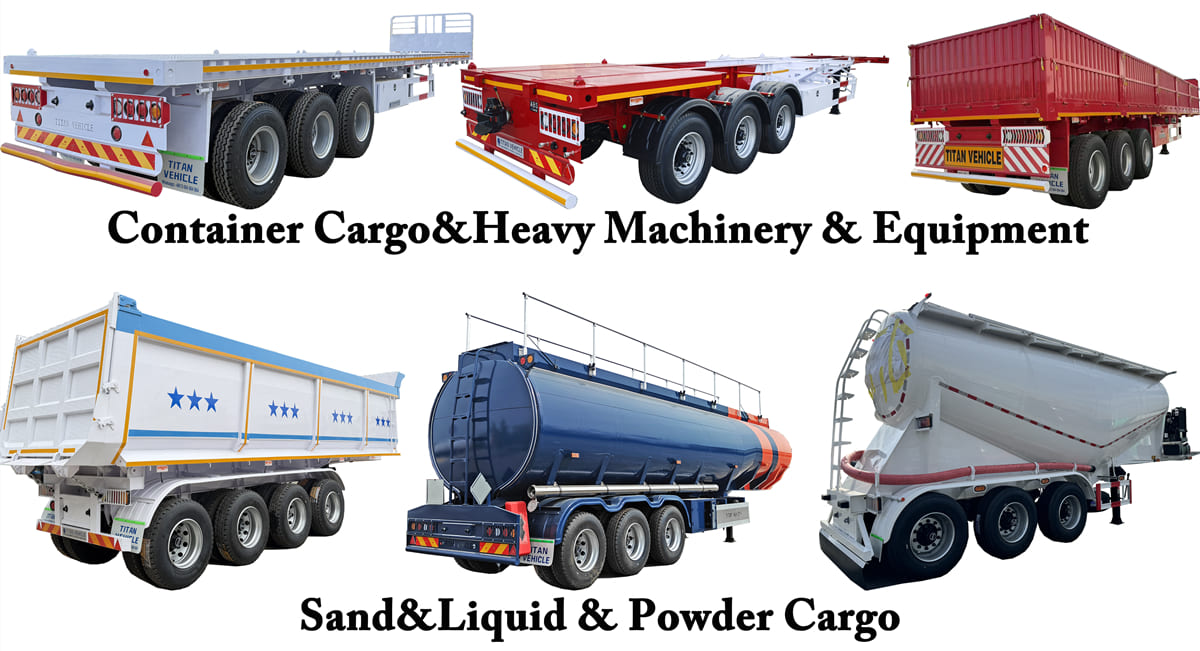
40 ft flatbed trailer for sale is suitable for general cargo such as containers, steel products, pipes, and construction materials because of its open platform and flexible loading methods.
A lowbed trailer is designed for heavy machinery transportation, including excavators, bulldozers, mining equipment, and oversized construction machines. Its low deck height provides a lower center of gravity and better stability.
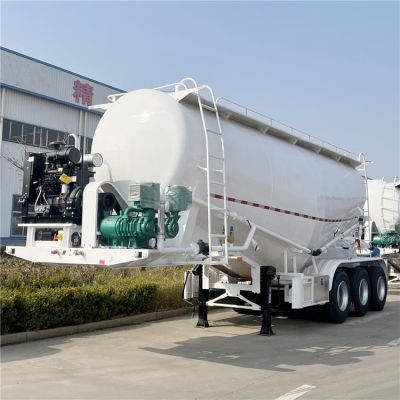
For liquid, powder, or bulk materials, specialized trailers such as tanker trailers, cement tankers, and dump trailers are more suitable.
Consider Cargo Weight And Dimensions
Cargo weight and size determine the trailer capacity and configuration.
Heavy cargo requires:More axles,Stronger main beams,Higher load capacity
Consider Loading Method And Road Conditions
The loading method affects trailer selection.
Flatbed trailers are suitable for cargo loaded by crane or forklift, while lowbed trailers are better for self-propelled equipment that can drive onto the trailer through ramps.
Road conditions should also be considered.
Flatbed trailers are ideal for highways and regular logistics, while heavy-duty lowbed trailers perform better in mining areas, construction sites, and rough roads.
Choose The Right Trailer Configuration
A suitable trailer configuration depends on:Axle number, Suspension system, Tire specification, Material strength, Braking system
For heavy-duty applications, reinforced structures, high-strength steel, mechanical suspension, and reliable braking components improve durability and safety.
Selecting the suitable trailer requires balancing cargo type, load capacity, dimensions, and operating environment.
Choosing the right trailer ensures safer transportation, higher efficiency, and better long-term operating value.
When choosing between new and used trailers, consider your operating requirements.
New Trailer Advantages: Customized specifications, Longer service life, Latest technology, Manufacturer warranty
Used Trailer Advantages: Lower initial investment, Faster availability
However, used trailers should be carefully inspected for:
Frame condition, Axle wear, Suspension system, Brake system, Corrosion
For long-term heavy transport operations, a new trailer is usually the better investment.